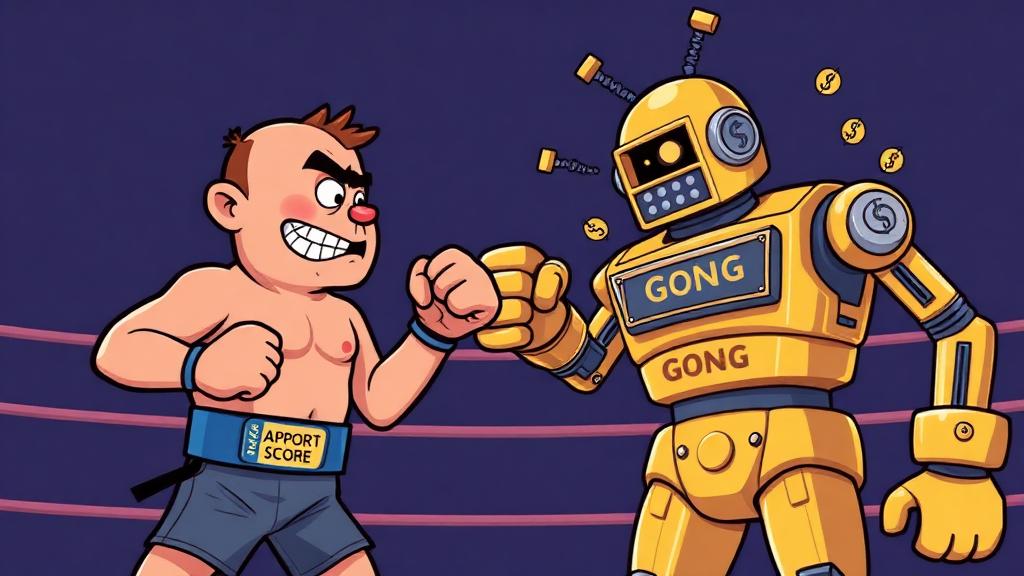
The AI Coaching Landscape in 2026: Where RapportScore Fits
The AI coaching market is evolving rapidly. This analysis covers how behavioral measurement differs from sentiment analysis tools, why conversation intelligence platforms are converging, and what the future holds.
RapportScore.ai Team
Product & Growth

The Explosion of AI Coaching Tools
The AI coaching market has grown from a niche category to a multi-billion-dollar industry in just three years. Every major sales enablement platform now offers some form of AI-powered conversation analysis. Leadership development programs are integrating AI coaching modules. Even consumer wellness apps are adding conversational AI features.
But not all AI coaching is created equal. The market splits into three distinct categories, each with fundamentally different approaches to improving human communication.
Category 1: Call Recording and Analytics
Platforms like Gong and Chorus pioneered the conversation intelligence space by recording sales calls and extracting analytics. These tools measure talk-to-listen ratios, track keyword mentions, identify competitive references, and flag deal risks based on conversation patterns.
These platforms solve an important problem: visibility. Before conversation intelligence, sales managers had no scalable way to understand what was happening on their team's calls. Now they do.
But recording and analytics have a ceiling. They tell you what happened. They don't fundamentally change how your team communicates. The data is retrospective, the insights are aggregate, and the coaching is still dependent on a human manager interpreting the numbers and delivering feedback.
Category 2: Sentiment Analysis and NLP
A newer wave of tools applies natural language processing and sentiment analysis to conversations. These platforms claim to measure emotional tone, detect positive and negative language patterns, and provide real-time feedback on communication style.
The problem is that sentiment analysis measures words, not behavior. A person can use positive language while their nervous system broadcasts anxiety. They can say "I hear you" without actually hearing anything. Sentiment is a surface metric that misses the behavioral depth where trust and influence actually live.
These tools also struggle with cultural and contextual nuance. What reads as "negative sentiment" in one context might be healthy directness in another. Sarcasm, dry humor, and indirect communication styles are routinely misclassified.
Category 3: Behavioral Measurement and Development
RapportScore represents a third category: platforms that measure observable behavioral patterns rather than words or sentiment. This approach is grounded in neuroscience and behavioral psychology research, analyzing the conversational dynamics that predict trust, influence, and relationship quality.
Instead of asking "what did they say?" behavioral measurement asks "what did they do?" How did they respond when the conversation got difficult? Did they acknowledge before responding? Was their presence consistent throughout, or did they check out when the topic shifted?
This category is still emerging, but the research backing is robust. The behavioral patterns that predict conversational effectiveness are well-documented across psychology, neuroscience, and communication science — they've just never been measurable at scale before.
Where the Market Is Heading
The convergence is already beginning. Call recording platforms are adding coaching features. Sentiment tools are trying to incorporate behavioral signals. And behavioral measurement platforms like RapportScore are building integrations with existing tools.
The future of AI coaching isn't any single category winning — it's the integration of all three. Visibility (what happened), interpretation (what it means), and development (how to improve) will converge into unified platforms.
RapportScore's position in this landscape is unique: we started with the hardest problem (behavioral measurement) and are building toward the broader platform. Most competitors started with the easiest problem (recording) and are trying to work backward toward behavioral insight.
Frequently Asked Questions
How is RapportScore different from Gong or Chorus?
Gong and Chorus focus on call recording and analytics — they tell you what happened. RapportScore measures behavioral patterns that predict trust and influence, providing development feedback that changes how your team actually communicates.
What is the difference between sentiment analysis and behavioral measurement?
Sentiment analysis measures the emotional tone of words. Behavioral measurement analyzes observable patterns like pacing, acknowledgment quality, and regulation under pressure — the dynamics that actually determine conversational effectiveness.
Is AI coaching replacing human coaches?
No. AI coaching scales the measurement and feedback process, making coaching insights available after every conversation rather than quarterly. The best results combine AI-powered behavioral analysis with human coaching for interpretation and accountability.
What is the future of AI coaching?
The market is converging toward platforms that combine visibility (recording), interpretation (behavioral analysis), and development (coaching). RapportScore started with behavioral measurement and is building toward a comprehensive development platform.